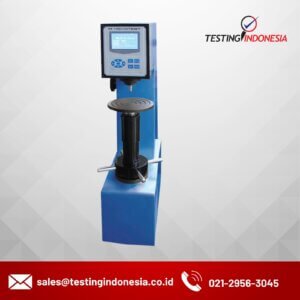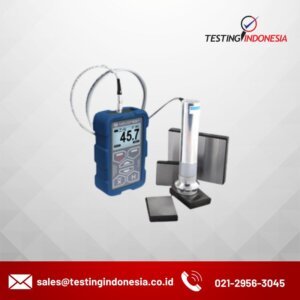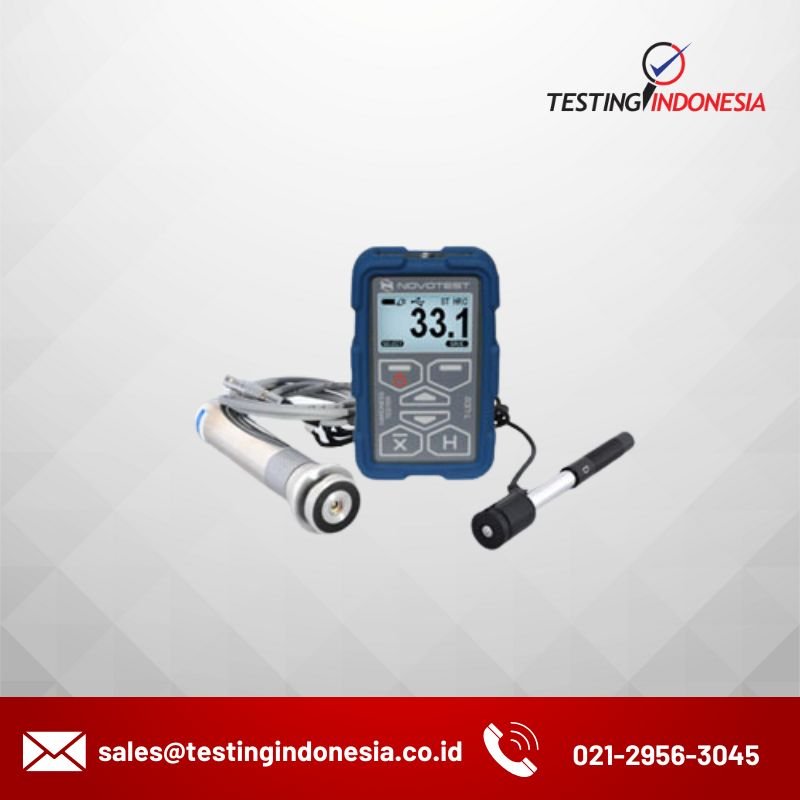
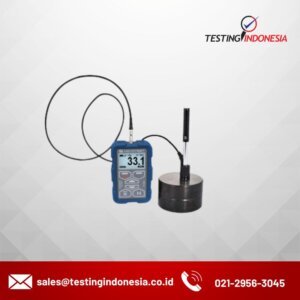
Combined Hardness Tester NOVOTEST T-UD2

Description

Combined Hardness Tester NOVOTEST T-UD2

Combined Hardness Tester NOVOTEST T-UD2 dirancang untuk pengujian kekerasan non-destructive yang cepat pada:

  • Logam dan paduan (alloys) pada skala kekerasan standar.

  • Logam dengan karakteristik yang berbeda dari baja (misalnya logam non-ferrous, alloys, besi cor/cast iron, dll.) menggunakan skala tambahan untuk kalibrasi.

  • Penentuan kekuatan tarik menggunakan skala tensile strength (Rm) untuk produk baja karbon pearlitic melalui konversi otomatis dari skala kekerasan Brinell (HB).

Alat ini menerapkan 2 metode pengujian: rebound (Leeb) dan ultrasonic contact impedance (UCI). Kombinasi dari kedua metode ini memungkinkan pengguna untuk menguji seluruh rentang produk logam.

Metode UCI untuk Pengujian Kekerasan

Metode pengukuran kekerasan UCI telah sesuai dengan standar ASTM A1038.

UCI probe ditujukan untuk pengukuran kekerasan pada area pengujian dengan ketebalan minimal (mulai dari 1 mm), objek dengan bentuk permukaan yang kompleks, serta untuk mengukur kekerasan lapisan permukaan yang dikeraskan (surface hardened layers).

Metode ini sangat cepat dan mudah:

  1. Tempelkan probe pada permukaan objek uji.

  2. Tekan probe dengan tekanan yang sesuai ke permukaan.

  3. Simpan nilai kekerasan yang muncul pada layar perangkat.

Penggunaan diamond indenter berukuran kecil memungkinkan pengukuran nilai kekerasan pada semua item yang memiliki ketebalan lebih dari 1 mm. Metode UCI adalah metode pengujian yang paling minim kerusakan (least destructive) karena NOVOTEST T-UD2 dengan UCI probe meninggalkan jejak tekan (imprints) yang jauh lebih kecil dibandingkan mayoritas alat penguji kekerasan tipe bench. Itulah mengapa portable hardness tester dengan UCI probe adalah pilihan terbaik.

Metode Leeb untuk Pengujian Kekerasan

Metode pengukuran kekerasan Leeb telah sesuai dengan standar ASTM A956.

Leeb probe (D type) digunakan untuk mengukur kekerasan objek yang masif (berat lebih dari 5 kg dan ketebalan lebih dari 10 mm) yang terbuat dari baja, logam non-ferrous, besi cor (cast irons), material berbutir kasar (coarse-grained materials), dan lain-lain. Selain itu, metode Leeb secara sempurna melengkapi metode UCI ketika metode tersebut tidak dapat diterapkan.

Prosedur pengujiannya sangat cepat dan praktis:

  1. Posisikan probe secara vertikal di atas permukaan objek uji.

  2. Tekan probe untuk mengisi pegas (charge the spring).

  3. Tekan tombol di bagian atas probe untuk melakukan pengukuran.

  4. Simpan nilai kekerasan yang ditampilkan pada layar.

Untuk metode Leeb, NOVOTEST T-UD2 secara otomatis menghitung kekerasan untuk berbagai macam material seperti baja (steel), baja tahan karat (stainless steel), besi cor (cast iron), perunggu (bronze), dan aluminium.

Combined hardness tester ini adalah solusi yang paling universal, tidak memerlukan kalibrasi ulang, dan sepenuhnya siap digunakan langsung setelah keluar dari kemasan (out of the box).
Spesification

UCI probe types
  • 1kgf (10N) 2.2 lbf
  • 5kgf (50N) 11lbf
  • 10kgf (98N) 22lbf
Leeb probe types
  • D
  • DC
  • DL
  • C
  • D+15
  • E
  • G
Indenter
  • Diamond indenter (UCI)
  • Hardened ball (Leeb)
Hardness scale
  • UCI probe: HRC, HB, HV
  • Leeb probe: HRC, HB, HV, HLD
Measurement hardness range:
  • Rockwell, HRC
  • Brinell, HB
  • Vickers, HV
  • 20 – 70
  • 90 – 450
  • 230 – 940
Measuring accuracy
  • HRC: 2HRC
  • HB: 10HB
  • HV: 15HV
Standards
  • ASTM A1038
  • ASTM A956
  • ASTM E140
Measuring directionAny direction 360°
Materials
  • UCI probe – pre-calibrated for steel.
  • Leeb probe – pre-calibrated for steel, alloy steel, stainless steel, aluminum.
  • Additional custom scales and materials for calibration.
Operating temperature range, ° C-20 … +40
Power supply2pcs AA batteries
Dimensions, mm120x60x25
Weight of electronic unit with battery, no more, kg0.2
Batteries life, not less, h20

Features

  • 2 removable probes: ultrasonic contact impedance  (UCI) and dynamic, rebound (Leeb)
  • There are no restrictions for hardness testing (by weight, configuration, structure, degree of mechanical and thermal treatment, etc.)
  • To evaluate changes in the hardness of the hardened layer depth articles and the effect of surface stress
  • Wide range of hardness value
  • Convenience and ease in operation
  • Minimum number of imprints
  • Graphical display with backlight
  • Automatic recognition of probe
  • Control of the batteries
  • Extended temperature range (cold-resistant, down to -20 °C)
  • Device has internal memory and allows user to connect with PC
  • New, intuitive menu with tips on the buttons

Standard Packages

  • Hardness tester
  • UCI probe (10N, 50N or 98N for choice)
  • Leeb probe (D type)
  • 2pcs AA batteries
  • Charger
  • USB cable
  • Operating manual
  • Software for PC
  • Calibration certificate
  • Case

Available Option

  • Additional UCI and Leeb probes
  • Batteries
  • Charger
  • Hardness test blocks
  • Portable grinding machine
  • Case for hardness tester
  • Set of support rings for D, DC type Leeb probes
  • Impact bodies for Leeb probes

Features and applications of UCI U1 probe type

ModelLoadFeaturesMain applications
UCI U1 (98 N)98 N(10 kgf)The main type of probe for solving most problems of hardness measurement. 10 kg load is to be applied for measurement (set automatically by the probe). Low requirements for surface cleanliness.–   Heat-treated and cemented details.-   Measuring in grooves, on teeth, on radius surfaces.-   Measurement on the blades, on the internal surface of the pipes, openings.
UCI U1 (50 N)50 N(5 kgf)The main probe type for the most tasks of hardness measurement. 5 kg. load is to be applied for measurement (automatically controled by the probe). Average surface cleannes requirements.–   Heat-treated and cemented parts, for example, shafts, turbines, gears, teeth, welds, heat affected zones.-   Measuring in grooves, on teeth, in grooves, on radius surfaces.-   Measurement on the blades, on the internal surface of the pipes, openings.
UCI U1 (10 N)10 N(1 kgf)The reduced load probe is designed to measure the hardness of material with increased requirements to the print size (polished surfaces), to measure the hardness of surface hardened layers. 1 kg. load is to be applied for measurement (automatically controled by the probe). More sensible to the surface cleanliness, in comparison with U1 (50 N).–   Nitrided and cemented surface layers of molds, stamps, stamps, thin-walled parts.-   Bearings, lateral surfaces of saws teeth.-   Measurement of hardness of hardening coatings.-   Measurement on the blades, on the inner surface of the pipes, inside the holes.